The
“Law of Excluded Middle”
states that every proposition must be
either True or False.
This “law” must be discarded.
Its acceptance hinders the study of meaningful propositions, and is
incompatible with the nature of reality and the nature of Truth.
The Quotations given below are in support of
the necessity for a third category.
[…] we know that because of instrumental uncertainty and errors of observation, cases will arise in which we cannot say whether the wave length is greater or less than one of the critical values. This it seems to me is characteristic of most judgments involving physical processes–
the law of the excluded middle is
not
a valid description of our physical experience– there has to be a third category of
doubtful, in addition to
positive
or
negative.
P. W. Bridgman; The Nature of Physical Theory; 1936; p38
We saw in the preceding chapters that the judgments we form on the testimony of our eyes concerning extension, figure, and motion are
never exactly true.
Nonetheless, it must be agreed that they are
not altogether false
[…]
N. Malebranche; (1638-1715); The Search after Truth; 1674/1997; p48
 As I said earlier, single words without context are
neither true nor false.
As I said earlier, single words without context are
neither true nor false.
J. W. Robbins;
Without a Prayer; 1997; p78
Ignorance is neither true nor false.
J. W. Robbins;
https://godshammer.wordpress.com
/2009/05/18/john-robbins-quick-quote-2/
A
proposition therefore is defined as the meaning of a declarative
sentence. Some sentences are not declarative, such as commands in the
imperative mood, or exhortations in the well-nigh extinct subjunctive
mood. Questions, or interrogative
sentences, also are neither true nor false.
Only declarative sentences are true or false; and it is this common
character that is important for propositions. Of course in English
rhetoric there are questions that are intended as propositions. They are
called rhetorical questions. They are an embellishment of style. They
spruce up a speech. But logically they are propositions.
A question that is intended as a question
is neither true nor false. It can
play no part in an argument.
Let us now return–
an exhortation, neither true nor false,
but one which it is hoped that the student will follow– to the simplest
propositions and the simplest form of arguments.
Gordon Clark; Logic;
1988; p30
Knowledge is the exercise
of the mind or reason; without reason there can be neither morality nor
righteousness. These require thought. Lacking these, animals are
neither righteous nor
sinful.
Gordon Clark; In Defense of Theology; Imago Dei; p109; 1984
Whereas words are always meaningful or have significance (otherwise, they
would not be words in the lexicon of a language), phrases or sentences may
be either significant or insignificant, according to the way in which words
are put together in their construction. Even when they are significant,
phrases, like words, are neither true nor false.
Only significant sentences, and among significant sentences only those which
can be construed as assertible propositions, are either true or false. Not
all significant sentences are declarative in mood; questions, for example,
and commands are neither true nor false.
Not even all significant sentences which are declarative in mood can be
construed as existential affirmations or denials. Only such sentences and
only those which are affirmative involve a word or phrase which, occupying
the position of the subject term, must be construed as denoting something
that really exists; if it cannot be so construed, the affirmative
existential proposition is false.
Mortimer J. Adler; Some
Questions About Language; 1993; p32
Tertium Quid in Scripture
But God had come to Laban the Syrian in a dream by night, and said to him, “Be careful that you speak to Jacob neither good nor bad.”
Gen. 31:24 & 29
Then Balak said to
Balaam, “Neither curse them all, nor bless them all!”
Num. 23:25
‘Let me pass through your land; I will keep
strictly to the road, and I will turn neither to the right nor to the left.’
Deut. 2:27
Then the woman whose son was living spoke to the
king, for she yearned with compassion for her son; and she said, “O my lord,
give her the living child, and by no means kill him!” But the other said,
“Let him be neither mine nor yours, but divide him.”
1Kings 3:26
For I considered all
this in my heart, so that I could declare it all: that the righteous and the
wise and their works are in the hand of God. People know neither love nor
hatred by anything they see before them.
Eccl. 9:1
“They shall neither
shave their heads nor let their hair grow long; but they shall keep their
hair well trimmed.”
Ezek. 44:20
It shall be one day
which is known to the Lord - Neither day nor night. But at evening time it
shall happen that it will be light.
Zech. 14:7
Nouns and verbs, provided nothing is added, are like thoughts without
combination or separation; ‘man’ and ‘white’, as isolated terms, are
not yet either true or false.
Aristotle;
De Interpretatione; 16a,
1.10-15.
Epimenides […] claimed that people from Crete
always told lies. This was […] somewhat inexplicable, as he himself was
from Crete. If it was true, then what he himself was saying should have been
a lie; but if it were a lie, then […] Effectively,
the statements are
neither true nor false,
although they look like they ought to be. Unlike sentences such as say,
‘Hello Amy,’ which do not need to be given a ‘truth value.’
Martin Cohen; 101 Philosophy Problems; 1999; p119
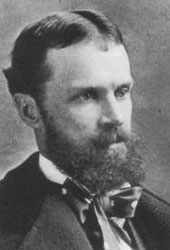 Sensations
[…] are
neither true nor false,
they simply are.
Sensations
[…] are
neither true nor false,
they simply are.
William James; (1842-1910); Pragmatism; 1906/1978; p117
 Our
rejection of a third division represents only our penchant for simplicity.
Our
rejection of a third division represents only our penchant for simplicity.
C. I. Lewis; (1883-1964); A Pragmatic Conception of the a priori; 1923
In jurisdiction there are various guiding principles: one lays down that
the judge has to decide every case; according to another he is free to
leave a case undecided. If we attempt to carry through the analogy into
language, we notice that Aristotelian two-valued logic corresponds to
the principle of deciding every case. But this is not the only
possible policy.
There is also the possibility of saying, “I want no
decision.” And this tendency would find fulfillment in a language in
which it would make sense to say of a given sentence that it is, in
certain circumstances, neither true nor false.
Friedrich Waismann; Are There Alternative
Logics?; 1946
Does the artist communicate? […] The work of art conveys no literal meaning–
no fact or law is asserted, and the work is
not true or false.
J. H. Randall & J. Buchler; Philosophy: An Introduction; 1957; p117
p 141 - […] a verbal form is neither
true nor false
unless we are certain that we can prove or disprove it.
p142 - It rained in London on January 1, 1066. There may be historical
evidence by which this can be proved true or false, but I am not certain
that there is, and therefore, by the doctrine, it is
neither true nor false.
In like manner, the form of words “it will rain in London tomorrow”
will become true or false tomorrow (if uttered today), but is
neither true nor false
when it is uttered.
p 143 - “The greatest finite integer that
will ever have been mentioned is not the greatest finite integer.” This,
so far as I can see, is, on finitist principles, forever incapable of
proof or disproof, and therefore forever
neither true nor false.
p145 - Miss
Ambrose, if we are to interpret her literally, must hold that the
statement “all men are mortal” is
neither true nor false,
since we are not “certain of being able to verify it or prove it false.”
For my part,
I hold that, as soon as I know what is meant by “men” and what by “mortal,” I know what is meant by
“all men are mortal,” and I know quite
certainly that either this statement is true or some man is immortal. I
am led to reject finitism because (1) it rests on what seems to me an
untenable general principle, that what cannot be proved or
disproved is neither true nor false
[…]
p 147 - The empiricist, therefore, must
include among his premises the trustworthiness of memory (with the
limitations demanded by common sense), in spite of the fact that neither
now nor hereafter can we find any evidence for the truth of this
premise.
The Limits of
Empiricism; Bertrand Russell; 1936; Proceedings of the Aristotelian
Society.
[9/21/25]
 The
long belief in the universal validity of the principle of the excluded third
in mathematics is considered by intuitionism as a phenomenon of civilization
of the same kind as the old-time belief in the rationality of
π
[…]
The
long belief in the universal validity of the principle of the excluded third
in mathematics is considered by intuitionism as a phenomenon of civilization
of the same kind as the old-time belief in the rationality of
π
[…]
L. E. J. Brouwer; (1881-1966); Consciousness, Philosophy, and Mathematics; 1940
Usually
[read: Always], inductive
conclusions cannot be called universally true […] because they are
generalizations, and exceptions are
always possible.
Rather than being
true or false, they are more or less probable.
They involve degrees of probability.
Norman L. Geisler & Ronald M. Brooks;
Come Let Us Reason; 2005; p134
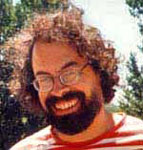 […] there are many non-classical logics in which
excluded middle is abandoned
as a general principle […]
[…] there are many non-classical logics in which
excluded middle is abandoned
as a general principle […]
Hartry Field; (1946-);
Indeterminacy, Degree of Belief, and Excluded Middle;
Noûs; 2000; v34; n1; p12
“We choose as axioms propositions that are as evident as possible.” If
properly understood, this statement is acceptable; but if the reader is
not told also of the definitional character of an axiom, he may not see
that
an axiom as such is neither true nor false.
Henry Blumberg; Review:
Einleitung in die
Mengenlehre by A. Fraenkel; 1919;
The American Mathematical
Monthly; 1923; p200
[…] we may have a consistent deductive system in which there is
neither truth nor falsity.
J. H. Randall & J. Buchler; Philosophy: An Introduction; 1957; p136
 According to the law of Excluded Middle, every meaningful statement is true or false. According to Frege’s Basic Law Five, the statement “The Monster is a Russell set” is meaningful. It must be true or false. However, Russell discovered,
it can’t be true, and it can’t be false!
According to the law of Excluded Middle, every meaningful statement is true or false. According to Frege’s Basic Law Five, the statement “The Monster is a Russell set” is meaningful. It must be true or false. However, Russell discovered,
it can’t be true, and it can’t be false!
R. Hersh; (1927-2020); What is Mathematics, Really?; 1997; p310
Real-life examples of 3-valued logic:
In Voting:
1- FOR; 2- AGAINST; 3- ABSTAIN
In Verdicts:
1- Guilty; 2- Not Guilty; 3- Innocent
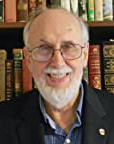 […]
if mathematics is merely the formal manipulation of symbols, truth and
falsity in the ordinary sense have nothing to [do] with it.
[…]
if mathematics is merely the formal manipulation of symbols, truth and
falsity in the ordinary sense have nothing to [do] with it.
Bryan Bunch; Mathematical Fallacies and Paradoxes; 1982; p159
We will say that the propositions of arithmetic are
neither true nor false,
but only compatible or non-compatible with certain conventions.
Friedrich Waismann; (1896-1959); Introduction to Mathematical Thinking; 2003; p120
 Arithmetic is not bivalent.
Charles Sayward;
(1937-2023);
Four Views of Arithmetical Truth;
Philosophical Qrtly.; v40; n159; 1990; p157
The axioms and theorems of these geometries are neither empirical nor a priori truths. They are
neither true nor false
any more than the use of polar coordinates rather than rectangular is true or false. Poincaré called them conventions.
M. Kline; Mathematics: The Loss of Certainty; 1980; p343
 In
the classical two-valued logic, the truth value of a complex statement is
determined by the truth-values of its constituents; but this is inessential
to the realist position. […] This would involve the use of
three-valued
truth-tables […] in this sense we could then say that
a statement might be neither true nor false.
This kind of
rejection of the law of excluded middle
does not reflect any divergence from realism.
In
the classical two-valued logic, the truth value of a complex statement is
determined by the truth-values of its constituents; but this is inessential
to the realist position. […] This would involve the use of
three-valued
truth-tables […] in this sense we could then say that
a statement might be neither true nor false.
This kind of
rejection of the law of excluded middle
does not reflect any divergence from realism.
Michael Dummett; (1925-2011); Truth and Other Enigmas; 1978; p155-156
1. the number of Xs is > the number of Ys.
2. the number of Ys is > the number of Zs.
therefore
3. the number of Xs is > the number of Zs.
Here the statements are
neither true nor false.
It is in these forms of statements that the mathematician is interested, and
not in what the statements are about, i.e. not in their subject-matter.
J. H. Randall Jr.; Philosophy: An Introduction; 1957; p62
Strictly speaking, mathematical propositions are neither true nor false;
they are merely implied by the axioms which we assume. If we
accept these premises and employ legitimate logical arguments, we obtain
legitimate propositions.
The postulates are
not characterized by being true or false;
we simply agree to abide by them.
E. Kasner & J. Newman; Mathematics and the Imagination; 1940;
p219
 Might it not be possible to devise a system in which there is a
third
label in addition to the two labels “true” and “false”?
Might it not be possible to devise a system in which there is a
third
label in addition to the two labels “true” and “false”?
[…]
perfectly good workable logics or deductive systems were created in which a proposition can have either the value “true” or “not-true,” or any one of
any given number of values different from these.
[…] the “laws of thought” to which habit has accustomed us for 2300 years are no more “necessary” for a consistent
description and correlation of our experiences than was Euclidean geometry.
Eric Temple Bell; The Search for Truth; 1946; p246
CLARIFICATION
Multi-valued logic must not be confused with polylogism.
Polylogism is the theory that each class within a society has its own logic.


