It is the merest truism, evident at once to unsophisticated observation, that mathematics is a human invention.
Percy W. Bridgman; (1882-1961);
The Logic of Modern Physics; 1927/1951; p60
Is geometry derived from experience? Careful discussion will give the answer-
no!
We therefore conclude that
the principles of geometry are only conventions […]
Whence are the first principles of geometry derived? Are they
imposed on us by logic? Lobatschevsky, by inventing non-Euclidean geometries, has shown that this is not the case.
Henri Poincaré; (1854-1912);
Science & Hypothesis; 1905/1952; pxxv
[…] number is entirely the creature of the mind.
George Berkeley; (1685-1753); Principles of Human Knowledge; 1710; s12
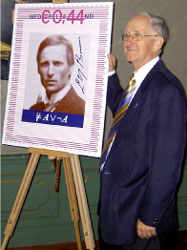 […] mathematics […] although it can be
applied to
an exterior world, neither in its origin nor in its methods
depends on
an exterior world.
[…] mathematics […] although it can be
applied to
an exterior world, neither in its origin nor in its methods
depends on
an exterior world.
L. E. J. Brouwer; (1881-1966); Brouwer’s Cambridge Lectures on Intuitionism;
Dirk van Dalen, ed.; 1951/1981; p92
[…] the whole of Arithmetic and Algebra has been shown to require three indefinable notions and five indemonstrable propositions.
Bertrand Russell; (1872-1970); Mysticism and Logic; 1914/1957; p73
 Mathematics is a human artefact, a human conception, in which there is no truth […] there
is no absolute unity; no absolute space and no absolute time, there
is
no mathematics.
Mathematics is a human artefact, a human conception, in which there is no truth […] there
is no absolute unity; no absolute space and no absolute time, there
is
no mathematics.
Gerrit Mannoury; (1867-1956); Quoted in Mystic, Geometer, and Intuitionist: The Life of L. E. J. Brouwer; Dirk van Dalen; 1999; p121
Non-Euclidean geometry is proof that mathematics […] is man’s own handiwork, subject only to the limitations imposed by the laws of
thought. […] [its] creation signalized the realization that mathematics in no sense depends upon our environment.
E. Kasner; (1878-1955); & J. Newman; (1907-1966); Mathematics and the Imagination; 1940; p359,361
Mathematics is the language of physical science and certainly no more marvelous language was ever
created
by the mind of man.
R. B. Lindsay; (1900-1985); On the Relation of Mathematics & Physics; 1963; p151
The scientist’s world
is perfectly mathematical, but the sense world is not.
Gordon Clark; (1902-1985); A Christian View of Men & Things; 1952/1981; p210
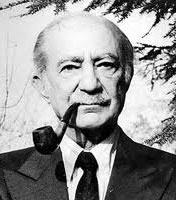 Modern astronomers might agree with Kepler that the heavens declare the glory of God and the firmament showeth His handiwork; however, they
now recognize that
the mathematical interpretations of the works of God are their own creations […]
Modern astronomers might agree with Kepler that the heavens declare the glory of God and the firmament showeth His handiwork; however, they
now recognize that
the mathematical interpretations of the works of God are their own creations […]
Morris Kline; (1908-1992); Mathematics and the Search for Knowledge; 1985; p85
All mathematics begins with a set of axioms. Any set of axioms is as
valid as any other as long as it avoids contradictory assumptions.
Billy E. Goetz; (1904-1986); The Usefulness of the Impossible;
1963; p189
[…] Science, and especially Mathematics, the ideal form of science, are creations of Intellect in its quest for Harmony.
Cassius J. Keyser;
(1862-1947); The Human Worth of Rigorous Thinking;
1913/1925; p23
[…] the number 2 […] is a metaphysical entity about which we can never
feel sure that it exists
[…]
Bertrand Russell; (1872-1970); Introduction to Mathematical
Philosophy; 1919/1993; p18
[…] the mathematician […] derives from the axioms
only what he puts into them, since all conclusions that follow are
logically
implicit in the axioms.
Morris Kline; (1908-1992); Mathematics: Method and Art; 1963; p165
 […]
numbers are free creations of the human mind […]
[…]
numbers are free creations of the human mind […]
Richard Dedekind; (1831-1916);
Essays on the Theory of Numbers;
1901/1963; p31
Nature does not count nor do integers occur in nature. Man made them all, integers and all the rest […]
Percy Williams Bridgman;
(1882-1961);
The Way Things Are; 1959; p100
[…]
mathematics is something that has been created over time as a means of conceptualizing the natural world. We should not be surprised by
its effectiveness at doing what it is designed to do.
Why is it that so much of science can be explained mathematically?
Because, so much of mathematics is speculative brainstorming.
The unreasonable effectiveness is an illusion.
Paul Cox; What is Mathematics? Part 2
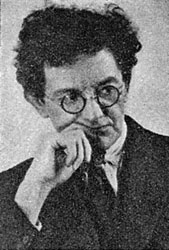 The mathematician is entirely free, within the limits of his imagination, to
construct what worlds he pleases. […] he is not thereby discovering the fundamental principles of the universe nor becoming acquainted with the ideas of God.
The mathematician is entirely free, within the limits of his imagination, to
construct what worlds he pleases. […] he is not thereby discovering the fundamental principles of the universe nor becoming acquainted with the ideas of God.
J. W. N. Sullivan; (1886-1937);
Mathematics as an Art; 1963; p271
[…] we see that an object with identity is an abstraction corresponding exactly to
nothing
in nature.
P. W. Bridgman; (1882-1961);
The Logic of Modern Physics; 1927/1951; p35
“The most beautiful equation in mathematics.”
Euler’s Identity
1 = -e
iπ
No two real things are precisely equal.
Billy E. Goetz; (1904-1986); The Usefulness of the Impossible; 1963; p188
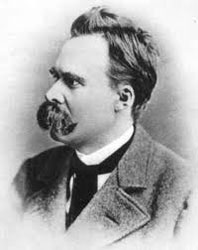 […] language imposes subjects and predicates on a world that does not have stable, enduring units corresponding to its terms.
F. Nietzsche; (1844-1900); Will to Power; cited in Truth in Philosophy; Barry Allen; 1993; p46
We are prepared to say that one and one are two, but not that Socrates and Plato are two […]
Bertrand Russell; (1872-1970); Introduction to Mathematical Philosophy; 1919/1993; p196
It is certain that all natural bodies, even those said to be of the same kind, differ from each other, that no two portions of gold are exactly
alike, and that one drop of water is different from another drop of water.
Nicolas Malebranche; (1638-1715); The Search After Truth; 1674/1997; p253
Ludwig Wittgenstein (Tractatus 5.5301):
“That identity is not a relation between objects is obvious.”
At 5.5303 he elaborates:
“Roughly speaking: to say of two things that they are identical is
nonsense, and to say of one thing that it is identical with itself is to
say nothing.”
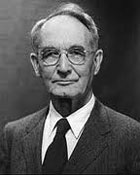 A
typical statement of empirical arithmetic is that 2 objects plus 2 objects makes 4 objects. This statement acquires physical meaning
only in terms of physical operations, and these operations must be performed in time. Now the penumbra gets into this situation through
the concept of object. If the statement of arithmetic is to be an exact statement in the mathematical sense, the “object” must be a
definite clear-cut thing, which preserves its identity in time with no penumbra.
But this sort of thing is never experienced, and as far as we know does not correspond exactly to anything in experience.
A
typical statement of empirical arithmetic is that 2 objects plus 2 objects makes 4 objects. This statement acquires physical meaning
only in terms of physical operations, and these operations must be performed in time. Now the penumbra gets into this situation through
the concept of object. If the statement of arithmetic is to be an exact statement in the mathematical sense, the “object” must be a
definite clear-cut thing, which preserves its identity in time with no penumbra.
But this sort of thing is never experienced, and as far as we know does not correspond exactly to anything in experience.
P. W. Bridgman;
(1882-1961); The Logic of Modern Physics; 1927/1951; p34
A simple arithmetic statement like “7+5=12” is true, not because it conforms to a set of empirical facts, but because it is a theorem of
arithmetic which is deducible from certain prior theorems which in turn derive from the postulates, rules and basic concepts of that
system.
Joseph Gerard Brennan; The Meaning of Philosophy; 1953; p85
If we are to add at all, we must add unlikes,
in violation
of all mathematical regulations.
Billy E. Goetz; (1904-1986); The Usefulness of the Impossible;
1963; p189
[…] we must concede that no material object is truly and
simply one.
St. Augustine; (354-430); De Libero Arbitrio; p45
You cannot step into the same river twice.
Heraclitus, 500 B.C.
You cannot step into the same river
even once.
Cratylus, 400 B.C.
Mathematics has been shorn of its truth; it is not an
independent, secure,
solidly grounded body of knowledge.
Morris Kline;
(1908-1992);
Mathematics: The Loss of Certainty; 1980; p352
How can it be that mathematics, being after all a product of human
thought which is independent of experience, is so admirably
appropriate to the objects of reality? […] In my opinion the answer to
this question is briefly this:-
As far as the laws of mathematics refer to
reality,
they are not certain;
and as far as they are certain,
they do not refer to reality.
Albert Einstein; (1879-1955); Sidelights on Relativity;
Dover; 1983; p28
 The object of mathematical theories is not to reveal to us the real
nature of things;
that would be an unreasonable claim.
The object of mathematical theories is not to reveal to us the real
nature of things;
that would be an unreasonable claim.
Henri Poincaré; (1854-1912);
Science & Hypothesis; 1902/1952; p211
 […]
the exact validity of mathematical laws as laws of nature is out of the
question.
[…]
the exact validity of mathematical laws as laws of nature is out of the
question.
L. E. J. Brouwer; (1881-1966);
Intuitionism and Formalism; 1912
Truth to the mathematician merely means freedom from internal
inconsistencies.
Billy E. Goetz; (1904-1986); The Usefulness of the Impossible; 1963; p189
In fact,
consistency, not truth,
is the key word to mathematical thought. […] The thought that the
axioms underlying a mathematical system must be “obvious truths” slowly became a thing of the past.
Carroll V. Newsom; (1904-1989); An Introduction to Modern Mathematical Thought; 1963; p75
In recent years
consistency replaced truth
as the god of mathematicians and now there is a likelihood that this god too may not exist.
Morris Kline;
(1908-1992);
Mathematics: Method and Art; 1963; p161
[…] Mathematics is still the paradigm of the best knowledge available.
Morris Kline;
(1908-1992);
Mathematics: The Loss of Certainty; 1980; p352
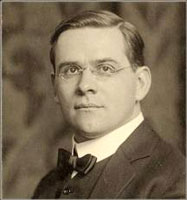 Although there is at present still considerable disagreement about the ultimate foundations of mathematics, nobody can nowadays hold the opinion anymore that “arithmetical propositions” communicate any knowledge about the real world. […] Their validity is that of mere tautologies; they are true because they assert nothing of any fact […]
Moritz Schlick; (1882-1936); Form and Content: An Introduction to Philosophical Thinking; in v2 Philosophical Papers; H. L. Mulder; ed.; 1979; p344
Although there is at present still considerable disagreement about the ultimate foundations of mathematics, nobody can nowadays hold the opinion anymore that “arithmetical propositions” communicate any knowledge about the real world. […] Their validity is that of mere tautologies; they are true because they assert nothing of any fact […]
Moritz Schlick; (1882-1936); Form and Content: An Introduction to Philosophical Thinking; in v2 Philosophical Papers; H. L. Mulder; ed.; 1979; p344
Thus the absence of all mention of particular things or properties in logic or pure mathematics is a necessary result of the fact that
this study is, as we say, “purely formal.”
Bertrand Russell; (1872-1970); Introduction to Mathematical Philosophy; 1919/1993; p198
Mathematics is the most abstract of all the sciences. For it makes no external observations, nor asserts anything as a real fact.
C. S. Peirce; Collected Works- The Regenerated Logic; 1896; p23

The White Flag of Surrender
Thus mathematics may be defined as the subject in which we never know what we are talking about, nor whether what we
are saying is true.
Bertrand Russell; (1872-1970);
Recent Work on the Principles of Mathematics; International Monthly; vIV; p84; 1901. In The Monist; v22
The critical mathematician has abandoned the search for truth. He no
longer flatters himself that his propositions are or can be known to him
or to any other human being to be true […]
Cassius J. Keyser; (1862-1947); The Human Worth of Rigorous Thinking; 1916; p221
In the words of the philosopher Wittgenstein, mathematics is just a grand tautology.
Morris Kline; (1908-1992);
Mathematics: Method and Art; 1963; p165
 The propositions of mathematics are devoid of all factual content; they convey no information whatever on any empirical subject matter.
Carl G. Hempel; (1905-1997); On the Nature of Mathematical Truth; 1945
The propositions of mathematics are devoid of all factual content; they convey no information whatever on any empirical subject matter.
Carl G. Hempel; (1905-1997); On the Nature of Mathematical Truth; 1945
The propositions of mathematics are of exactly the same kind as the
propositions of logic: they are tautologous, they say nothing at all
about the objects we want to talk about.
Hans Hahn; (1879-1934); Logic, Mathematics and Knowledge of
Nature; 1933
[…] for a period of over two thousand years, mathematicians pursued truth.
[…] Creations of the early 19th
century, strange geometries & strange algebras, forced
mathematicians, reluctantly and grudgingly, to realize that
mathematics proper, and
the mathematical laws of science
were not truths.
Morris Kline;
(1908-1992);
Mathematics: The Loss of Certainty;
1980; p3,4
 […]
arithmetic
is a calculus which starts only from certain conventions but floats
as freely as the solar system and
rests on nothing.
[…]
arithmetic
is a calculus which starts only from certain conventions but floats
as freely as the solar system and
rests on nothing.
Friedrich Waismann; (1896-1959);I
ntroduction to Mathematical Thinking; 1951; p121
The current predicament of mathematics is that there is not one but
many mathematics […] It is now apparent that the concept of a
universally accepted, infallible body of reasoning– the majestic
mathematics of 1800 and the pride of man– is
a grand illusion.
[…] one cannot speak of arithmetic as a body of truths
that necessarily apply to physical phenomena. […] Thus the sad
conclusion which mathematicians were obliged to draw is that
there is no truth in mathematics,
that is, truth in the sense of laws about the real world.
Morris Kline;
(1908-1992);
Mathematics: The Loss of Certainty; 1980; p6, 95
In sum, neither mathematics nor formal logic is a source of analytic
truths, and I do not know where else one would look for them. The
reasons why mathematics and formal logic have seemed plausible
sources of analytic truths is that they have seemed to be technical
contexts in which there might be point to the assertion of necessary
truths. But this view presupposes that mathematics and formal logic
can, as systems, be looked at as languages different from ordinary
language, with peculiarities of their own. They are not languages,
however. The rôle which they play is different from that of any
language.
D. W. Hamlyn; Analytic
Truths; Mind; v65; n259; 1956; p366-67
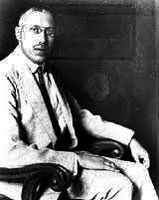 […] we do not experience numbers as we experience colors and sounds,
numbers are nothing in and by themselves[…]
[…] we do not experience numbers as we experience colors and sounds,
numbers are nothing in and by themselves[…]
Hans Hahn; (1879-1934); Empiricism, Logic and Mathematics; 1931/1980; p15
Gradually […] mathematicians granted that the axioms and theorems of mathematics were not necessary truths about the physical world. […] As
far as the study of the physical world is concerned,
mathematics offers nothing but theories or models.
Morris Kline;
(1908-1992);
Mathematics: The Loss of Certainty; 1980;
p97
The philosophical aims of the three schools [Intuitionism-
Brouwer, Logicism- Frege, Formalism- Hilbert] have thus not been achieved, and it seems to us that we are no nearer to
a complete understanding of mathematics than the founders of these schools.
Andrzej Mostowski; (1913-1975); Thirty Years of Foundational Studies; 1966; p8
The fundamental concepts of mathematics are […] empty space, empty time […] points without extension, lines without breadth, surfaces
without depth, spaces without content. All these concepts are contradictory fictions,
mathematics being based upon an entirely imaginary foundation, indeed upon contradictions. Upon
these foundations the psyche has constructed the entire edifice of this amazing science. Mathematicians have occasionally realized that
they were dealing with contradictions, but seldom or never was this made the subject of any profound study. The frank acknowledgement of
these fundamental contradictions has become absolutely essential for mathematical progress. The efforts made to conceal this fact have
all worn threadbare.
Hans Vaihinger; (1852-1933); The Philosophy of “As If”; 1924;
p51
[…] if mathematics is true (in the best, i.e. Platonistic, sense) then it seems we cannot know its truths.
Morton, A. & Stich, S. P.; eds.;
Benacerraf and his Critics; 1996; p67
Proof is obviously the most common source of evidence in
mathematics, but even proof must begin from axioms that are not themselves proved.
Penelope Maddy; Realism in Mathematics; 1990; p144
[…] mathematical propositions present themselves as true in virtue of a kind of convention and not because they express a true
knowledge of some real entity. Not having their own objects, mathematics cannot be conceived as a system of
“true” propositions
in the proper sense of this term.
Evandro Agazzi; Consistency, Truth and Ontology; Studia Logica; v97; n1; 2011; p13
[…] all mathematics is a gigantic tussle with nonexistent impossibilities.
Billy E. Goetz; (1904-1986); The Usefulness of the Impossible; 1963; p189
Geometry is not true,
it is advantageous.
Henri Poincaré; (1854-1912); Science & Method; 1908
[…] we can no more say that Einstein’s geometry is “truer” than
Euclidean geometry, than we can say that the meter is a “truer” unit of length than the yard.
Hans Reichenbach; (1891-1953); Philosophy of Space and Time; 1958; p35
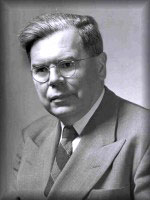 A straight line has no width, no depth, no wiggles and no
ends. There are no straight lines.
We have ideas about these
non-existent impossibilities; we even draw pictures of them. But they do not exist […]
A straight line hasn’t even a definition.
A straight line has no width, no depth, no wiggles and no
ends. There are no straight lines.
We have ideas about these
non-existent impossibilities; we even draw pictures of them. But they do not exist […]
A straight line hasn’t even a definition.
A
point has no dimensions, no existence, and no definition. […] Euclid lists
twenty-three definitions which define more than twenty-three
figments of the imagination.
[…] He assumes all right angles are equal, although
there are no right angles.
[…] Lastly, Euclid introduces five “common notions” as axioms, that is,
as self-evident truths, the very first of which is impossible, let alone
true: “Things equal to the same thing are equal to each other.” No two
things are precisely equal. […]
The whole of geometry is consciously, willfully,
deliberately antagonistic to reality.
Billy E.
Goetz; (1904-1986); President of MIT 1958;
The Usefulness of the Impossible;
1963; p187ff
[…] for geometry as a mathematical science, there is no problem concerning the truth of the axioms. This apparently
unsolvable problem turns out to be a pseudo-problem.
The axioms are
not true or false,
but arbitrary statements.
Hans Reichenbach; (1891-1953);
Philosophy of Space
and Time;
p5
[…] there is no reason to suppose that [a] triangle
is a revelation of an eternally pre-existing truth– such as a
thought in the mind of God. It is an arbitrary creation of the
mathematician’s mind, and did not exist until the mathematician
thought of it.
J. W. N. Sullivan; (1886-1937); The Limitations of Science;
1933; p152
Geometry predicates nothing about the relations of real things […]
Albert Einstein; (1879-1955); Sidelights on Relativity;
Dover; 1983; p35
The theory contends that an innate property of the human mind, the
ability of visualization, demands that we adhere to Euclidean
geometry. In the same way as a certain self-evidence compels us to
believe the laws of arithmetic, a visual self-evidence compels us to
believe the validity of Euclidean geometry. It can be shown that
this self-evidence is not based on logical grounds.
Hans
Reichenbach; (1891-1953); Philosophy of Space and Time; p32
It was thought till recently that geometry dealt with space and
spatial points, and laymen probably thought that, even if they
themselves did not succeed in grasping what a point of space was,
mathematicians at least had a perfect grasp of it.
But this was an enormous error:
mathematicians had no better grasp of it, and they were no more
capable of saying what a point really was than the nearest layman.
Hans Hahn; (1879-1934);
Empiricism, Logic and Mathematics; 1931/1980; p13
The ideas expressed in the preceding
considerations attempted to establish Euclidean geometry as
epistemologically a priori; we found that this a priori cannot be
maintained and that Euclidean geometry
is not an indispensable presupposition of knowledge.
Hans Reichenbach; (1891-1953);
Philosophy of Space and Time;
p31
I shall not attempt to prove that mathematics is useful. I will admit it and
so save myself the trouble that here is a great and respected discipline
where all is impossible yet much is useful.
The usefulness largely flows from the impossibility.
Mathematical concepts have been simplified and generalized until they
describe an imaginative world no part of which could possibly exist outside
men’s minds.
Billy E. Goetz; (1904-1986); The Usefulness
of the Impossible; 1963; p189
Though the axioms of non-Euclidean geometry appeared to be contrary to ordinary
human experience, they yielded theorems applicable to the physical world.
Morris Kline;
(1908-1992);
Mathematics: Method and Art;
p160
Every mathematical system contains undefined terms:
for example, the words ‘point’ and ‘line’ in a geometric system. In deductive proof from explicitly stated axioms
the meaning of the undefined terms is irrelevant.
[…] pure mathematics is not […] concerned with […] meanings (of) undefined terms.
[…] it is concerned with deductions that can be made from the axioms […]
Morris Kline; (1908-1992);
Mathematics: Method and Art; p166
Mathematicians do not know what they are talking about
because pure mathematics is not concerned with physical meaning.
Mathematicians never know whether what they are saying is true
because, as pure mathematicians, they make no effort to ascertain whether their theorems are true assertions about the
physical world.
Morris Kline; (1908-1992);
Mathematics: Method and Art;
p167
Thus, the analysis outlined on these pages exhibits the
system of mathematics as a vast and ingenious conceptual structure
without empirical content and yet an indispensable
and powerful theoretical instrument for the scientific understanding and mastery
of the world of our experience.
Carl G. Hempel; (1905-1997);
On the Nature of Mathematical Truth;
1945
We modify the mathematics when applications reveal misrepresentation or downright errors in the mathematics.
Morris Kline;
(1908-1992);
Mathematics: The Loss of Certainty; p344
Freeman Dyson agrees: “we are probably not close yet to understanding the relation between the physical and the mathematical
worlds.” […]
it is important to realize that nature and the mathematical representation of nature are not the same.
The difference is not merely that mathematics is an idealization,
the mathematical triangle is assuredly not a physical triangle.
These […] “explanations” […] say rather little […] in impressive language that tempers the admission that
they have no answer to why mathematics is effective.
Morris Kline;
(1908-1992);
Mathematics: The Loss of Certainty; p349
 It is sometimes assumed that the effectiveness of mathematics […] shows that mathematics itself exists in the structure of the physical
universe. This, of course, is not a scientific argument with any empirical evidence.
George Lakoff; (1941-); Where Mathematics Comes From; 2000; p3
It is sometimes assumed that the effectiveness of mathematics […] shows that mathematics itself exists in the structure of the physical
universe. This, of course, is not a scientific argument with any empirical evidence.
George Lakoff; (1941-); Where Mathematics Comes From; 2000; p3
How then under this view can mathematics apply to the physical world and especially to physical phenomena? There are
several answers. One is that mathematical axioms use undefined terms and these can be differently interpreted to suit the physical
situation.
Should we reject mathematics because we don’t understand its unreasonable effectiveness? […]
Should I refuse my dinner because I do not understand the
process of digestion?
[…] mathematics deals with the simplest concepts and phenomena of the physical world. It does not deal with man but with inanimate matter.
Morris Kline; (1908-1992);
Mathematics: The Loss of Certainty; p342, 350
The question of the existence of a Platonic mathematics cannot be addressed scientifically. At best, it can only be a matter of faith,
much like faith in God. […] The burden of scientific proof is on those who claim an external Platonic mathematics does exist […]
At present there is no known way to carry out such a
scientific proof […] as far as we can tell, there can be no such evidence, one way or the other. There is no way to tell empirically
whether proofs proved by human mathematicians are objectively true, external to the existence of human beings or any other beings.
George Lakoff; (1941-); Where Mathematics Comes From; 2000; p2, 342
Why then should the deductions still apply? Poincaré’s answer is
that we modify the physical laws to make the mathematics fit.
Morris Kline; (1908-1992); Mathematics: The Loss of Certainty; p343
Let us grant that the pursuit of mathematics is a divine madness of the human spirit.
A. N. Whitehead; (1861-1947); Science and the Modern World; /1958; p22
Why is math abstract?
Math is abstract because numbers are not real entities. They are purely imaginary concepts. We cannot experience numbers. We can make up stories
about them, such as “1+1=2”, but we can never experience such an operation since there is no such thing as ONE of anything in our
experience. If there is no such thing as ONE of anything in our experience, there can be No such thing as TWO of anything in our
experience, etc.
When we do math, we are playing a game in a world of imagination. Like in fairy tales, numbers are the characters in
that imaginary world and the operations are the activities that those fairy tale characters perform.
And just like fairy tales, math can be very useful, even though neither numbers nor fairy tale characters, really exist.
What evidence do we have that math is more than just a human construct and
represents universal truths?
In the words of Albert Einstein:- “… mathematics, is a product of human
thought which is independent of experience.”
The great logician Hans
Hahn says:- “We experience colors and sounds, but we do not experience
numbers.”
Math is a human invention. It does not exist outside of
human minds. God has no need for math, since an omniscient being has no need
for numbers. God does not need to count or measure.
In this diverse
world, we have the need to count discrete items and to measure the distance
between two points. For that reason we have created words (one, two,
three...) that we assign to
imaginary objects called numbers which help us to count and to measure.
If we want to trade several sheep for several cows, we want to know HOW MANY
of each to exchange for a fair trade.
If we want to exchange a piece
of gold for a piece of land, we weigh the gold and Measure the distance on
the scale. We give that distance a name, e.g. 6.25… grams. We measure the
land and give it a name, 2.2 acres.
Most people forget that there is
no such thing as ONE of anything in this world.
1+1=2 is true in the
imaginary world of math, but not in the world that we live in. (To be more
precise, 1+1=2 is a definition, thus is neither true nor false.)
We are born ignorant
and die pauciscient, which means that we have no means of accessing
universal truths of any kind.
Claiming that numbers are concepts that
are discovered is indefensible. No one has ever seen a number or a geometric shape. They are non-existent impossibilities.
Number words, such as “One,” “Two,” “Three,” are names that we give to objects and ideas that are convenient for us to arrange sequentially or chronologically.
The concepts that are represented by the symbols “0” and “1” on which all of
mathematics is founded, do not correspond to anything in creation. The symbol “0” as a place holder did not come into use until the middle ages.
Numbers have
been invented to try and organize our experiences; they do not have to exist to be useful, just as laws of science do not exist, yet
they are useful for dealing with the material world.
To allege that numbers and geometric shapes exist in God’s mind is a form of the heresy of Panentheism.
To assert that a
sinful, rebellious creature is able to peer into God’s mind and extract new knowledge is deviant and unorthodox.
Expecting to find truth in creation instead of in Christ is a common failure.
*********************
When we calculate, we violate the
mathematical regulations which we ourselves have stipulated, i.e. we have no choice but to sin every time we do math.
To ascribe to numbers a nature which belongs only to Truth and
to God, such as
immutability or eternality, is to erect idols.
To credit (or
to blame) God for the origin of numbers (and geometric shapes) is another instance of the “God of the (mathematical) Gaps” blunder.
Mathematics is a useful tool like mailboxes and shovels, but it can never lead to truth.
*********************
Mathematics is man’s creation. It is
built upon axioms that were assumed to be “self-evident” truths. There are no “self-evident” truths.
The “creation” of numbers by man mimics God’s creation of the universe.
The few propositions (axioms) on which
all of mathematics is based are analogous to the few commands that God spoke to create the universe.
The commands that God gave resulted in not only the creation of the universe, but
all of history itself.
In the case of mathematics, these axioms can lead to an endless number of mathematical “discoveries.”
*********************
God has created humans as “models” or
images of Himself. They are the only creatures who can be implanted
with Truth (=knowledge of God).
Humans mimic their Creator by creating
numbers (and geometric shapes) to model their environment. These
imaginary contrivances are totally impotent to lead anyone to Truth.
Just as we
invent saws because we have the need to cut wood, we also invent
numbers to help us to count and to measure. We do not ascribe saws
to God, neither should we ascribe numbers to God.
*********************
Adding and subtracting are not empirical operations. They are
operations which take place in our minds and not in real life.
“Adding” 1 apple plus 1 apple has no physical parallel. If someone
says: “I am placing an apple next to another apple, therefore now I
have 2 apples, I have “added” an apple to another apple,” we can
respond, “You didn’t need to move or place your apple near each
other. We could have “added” them while they were far apart. We
“add” human populations, countries, stars; they don’t need to be
near each other. “Addition” is a mental operation, not a physical
one.
Mathematics is the art of giving the same name to different things.
Henri Poincaré
Poetry is the art of giving different names to the same thing.
Unknown author
********************
Out of the ground the LORD God formed every beast of the field and every bird of
the air, and brought them to Adam to see what he would
call
them. And whatever Adam
called
each living creature, that was its
name. So Adam
gave
names
to all cattle, to the birds of the air, and to every beast of the field.
Genesis 2:19-20
The stunning parallel between the attempt at the mathematical representation of nature
and the mystical use of numbers called Bible Numerics can be seen at
Critique of Bible Numerics.
 […]
the present state of affairs […] is intolerable. Just think, the definitions and deductive methods which everyone learns, teaches and uses in mathematics, the paragon of truth and
certitude, lead to absurdities! If mathematical thinking is defective,
where are we to find truth and certitude?
[…]
the present state of affairs […] is intolerable. Just think, the definitions and deductive methods which everyone learns, teaches and uses in mathematics, the paragon of truth and
certitude, lead to absurdities! If mathematical thinking is defective,
where are we to find truth and certitude?
David Hilbert; (1862-1943); On the Infinite; 1925
Benacerraf, Paul
>
Mathematical Truth
Benacerraf, Paul >
What Mathematical Truth Could Not Be - I
Benacerraf, Paul >
What Numbers Could Not Be
Benacerraf, Paul; Putnam, Hilary; eds. >
Philosophy of Mathematics: Selected Readings- 1st ed.
Benacerraf, Paul; Putnam, Hilary; eds. >
Philosophy of Mathematics: Selected Readings- 2nd ed.
Brouwer, L. E. J. >
Intuitionism and Formalism
Cox, Paul >
What is Mathematics? Part 2
Creath, Richard >
Benacerraf and Mathematical Truth
Dales, H. G.; Oliveri, G.; eds. >
Truth in Mathematics
Denton, William >
Gödel’s Incompleteness Theorem
Devlin, Keith >
Kurt Gödel: Separating Truth from Proof in Mathematics
Frege, Gottlob >
Logic in Mathematics
Frege, Gottlob >
Posthumous Writings
Goetz, Billy E. >
The Usefulness of the Impossible
Hahn, Hans >
Empiricism, Logic, and Mathematics
Hahn, Hans >
Logic, Mathematics and Knowledge of Nature (Pap, tr.)
Hempel, Carl G. >
Geometry and Empirical Science
Hempel, Carl G. >
On The Nature of Mathematical Truth
Hersh, Reuben >
What is Mathematics, Really?
Jaki, Stanley L. >
A Late Awakening to Gödel in Physics
Kline, Morris >
Mathematics, The Loss of Certainty
Lolli, Gabriele >
Logical Completeness, Truth and Proofs
Lowe, E. J. >
Identity, Individuality, and Unity
Nagel, Ernest; Newman, James R. >
Gödel’s Proof
Pap, Arthur >
Mathematics, Abstract Entities, and Modern Semantics
Schaaf, William L.; ed. >
Our Mathematical Heritage
Vaihinger, Hans >
The Philosophy of “As If”
Weitz, Morris; ed. >
Twentieth Century Philosophy: The Analytic Tradition
White, Leslie A. >
The Locus of Mathematical Reality: An Anthropological Footnote
Wiebe, Richard >
Godel’s Theorem (Part II)
Williams, Daniel D. >
Truth in the Theological Perspective
Abarim >
The Incompleteness Theorem of Kurt Gödel
Anonymous >
Does Mathematics Reflect Reality?
Anonymous >
Gödel’s Incompleteness Theorems
Anonymous >
Mathematics
Askanas, Malgosia >
Gödel’s Incompleteness Theorems- A Brief Introduction
Ayer, Alfred Jules >
The A Priori
Barker, Stephen F. >
Philosophy of Mathematics
Barrett, William >
Science and Finitude
Barrow, John D. >
What is Mathematics?
Begley, Sharon >
Math Has p on its Face
Benacerraf, Paul >
An Interview with Paul Benacerraf
Benacerraf, Paul >
God, the Devil, and Gödel
Black, Max >
The Nature of Mathematics
Boucher, Andrew >
A Philosophical Introduction to the Foundations of Elementary Arithmetic
Brabenec, Robert L. >
The Impact of Three Mathematical Discoveries on Human Knowledge
Brouwer, L. E. J. >
Consciousness, Philosophy and Mathematics
Brouwer, L. E. J. >
Historical Background, Principles and Methods of Intuitionism
Brouwer, L. E. J. >
Intuitionistic Reflections on Formalism
Brouwer, L. E. J. >
Lectures on Intuitionism: Historical Introduction and Fundamental Notions
Brouwer, L. E. J. >
On the Significance of the Principle of Excluded Middle in Mathematics, especially in function theory
Carmichael, Robert D. >
The Larger Human Worth of Mathematics
Carus, Paul >
The Foundations of Mathematics
Castañeda, Hector-Neri >
Arithmetic and Reality
Chaitin, Gregory >
A Random Walk in Arithmetic
Chaitin, Gregory >
Gödel’s Theorem and Information
Chihara, Charles S. >
Truth, Meaning, and Paradox
Clifford, William Kingdon >
The Exactness of Mathematical Laws
Clifford, William Kingdon >
The Postulates of the Science of Space
Cobb, Charles W. >
Certainty in Mathematics and in Theology
Cohen, Daniel J. >
Equations from God
Cole, Juan >
The Problem of Referents
Colyvan, Mark >
Review: Truth in Mathematics by Dales & Oliveri
Cool, Thomas >
A Difficulty in Proof Theory
Cox, Paul >
What is Mathematics? Part 1
Curry, Haskell B. >
Remarks on the Definition and Nature of Mathematics
Dales, H. G.; Oliveri, G. >
Truth and the Foundations of Mathematics: An Introduction
Davis, Philip J. >
Fidelity in Mathematical Discourse: Is One & One Really Two?
Davis, Philip J.; Hersh, Reuben >
The Ideal Mathematician
de Klerk, Johan H. >
Mathematics from the Viewpoint of Science in Context
De Morgan, Augustus >
Assorted Paradoxes
Dresden, Arnold >
Brouwer’s Contributions to the Foundations of Mathematics
Dummett, Michael >
Gottlob Frege (1848-1925)
Dummett, Michael >
The Philosophical Basis of Intuitionistic Logic
Dummett, Michael >
What is Mathematics About?
Eddington, Sir Arthur Stanley >
The Theory of Groups
Euclid >
The Thirteen Books of Euclid’s Elements
Eves, Howard; Newsom, Carroll V. >
Crises in the Foundations of Mathematics
Field, Hartry >
Is Mathematical Knowledge Just Logical Knowledge?
Field, Hartry >
Science Without Numbers
Field, Hartry >
Which Undecidable Mathematical Sentences Have Determinate Truth Values?
Frege, Gottlob >
Letter to Russell
Frege, Gottlob >
The Concept of Number
Frege, Gottlob >
The Foundations of Arithmetic
Frege, Gottlob >
Translation of Parts of Frege’s Grundgesetze der Arithmetik
Frege, Gottlob >
Translations from the Philosophical Writings of Gottlob Frege
Gardner, Martin >
Mathematical Games: The Imaginableness of the Imaginary Numbers
Gasking, Douglas >
Mathematics and the World
Geach, Peter T.; Sutherland, Stewart R. >
Truth and God
Gillies, Donald A. >
Review: Brouwer’s Philosophy of Mathematics
Collected Works by L. E. J. Brouwer; A. Heyting; H. Freudenthal
Gödel, Kurt >
On Formally Undecidable Propositions of the Principia Mathematica and Related Systems
Gödel, Kurt >
Russell’s Mathematical Logic
Gödel, Kurt >
Some Metamathematical Results on Completeness and Consistency
Goodman, Nicholas D. >
Mathematics as an Objective Science
Goodstein, R. L. >
The Definition of Number
Gorman, David >
Gödel’s Theorem
Grabiner, Judith V. >
Is Mathematical Truth Time-dependent?
Grabiner, Judith V. >
Mathematics, Philosophy, and the “Real World”
Grabiner, Judith V. >
Why Did Lagrange “Prove” the Parallel Postulate?
Graham, Loren; Kantor, Jean-Michel >
Naming Infinity
Gray, Jeremy >
Janos Bolyai, Non-Euclidean Geometry and the Nature of Space
Greimann, Dirk; ed. >
Essays on Frege’s Conception of Truth
Haecker, Ryan >
In Defense of Plato on Mathematical Ideas
Hahn, Hans >
Hans Hahn: The Crisis in Intuition
Hahn, Hans >
Infinity
Hale, Bob; Wright, Crispin >
Benacerraf’s Dilemma Revisited
Hardy, Godfrey H. >
A Mathematician’s Apology
Heisenberg, Werner >
The Uncertainty Principle
Hempel, Carl G. >
On the Cognitive Status and the Rationale of Scientific Methodology
Hempel, Carl G. >
Science Unlimited?
Hempel, Carl G. >
The Function of General Laws in History
Hempel, Carl G. >
The Philosophy of Carl G. Hempel
Henkin, Leon >
Are Logic and Mathematics Identical?
Hersh, Reuben >
Definition of Mathematics
Hersh, Reuben >
Some Proposals for Reviving the Philosophy of Mathematics
Hesse, Mary B. >
Science and the Human Imagination
Heyting, Arend >
The Intuitionist Foundations of Mathematics
Hintikka, Jaakko >
Time, Truth, and Knowledge in Ancient Greek Philosophy
Hirst, R. J. >
Mathematics and Truth
Hudson, Hilda P. >
Mathematics and Eternity
Jacquette, Dale >
Mathematics and Philosophy of Mathematics
Johnson, George >
Useful Invention or Absolute Truth: What Is Math?
Jones, V. F. R. >
A Credo of Sorts
Kasner, Edward; Newman, James >
Paradox Lost and Paradox Regained
Keene, G. B. >
Analytic Statements and Mathematical Truth
Kennedy, Rick >
The Application of Mathematics to Christian Apologetics in Pascal’s Pensées and Arnauld’s The Port-Royal Logic
Kenner, Morton R. >
Meta-Mathematics and the Modern Conception of Mathematics
Keyser, Cassius J. >
Mathematical Philosophy
Keyser, Cassius J. >
The Group Concept
Keyser, Cassius J. >
The Human Worth of Rigorous Thinking
Kiely, Edmond R. >
Pisa, Galileo, Rome
Kitcher, Philip >
Frege’s Epistemology
Kline, Morris >
Mathematics: Method and Art
Koehler, O. >
The Ability of Birds to
“Count”
Lakatos, Imre >
Mathematics, Science and Epistemology
Lakatos, Imre; ed. >
Problems in the Philosophy of Mathematics
Lakoff, George; Nunez, Rafael >
Where Mathematics Comes From
Leacock, Stephen >
Common Sense and the Universe
Leng, Mary >
Introduction
Leng, Mary >
What’s there to Know?
Leng, Mary; Paseau, Alexander; Potter, Michael; eds. >
Mathematical Knowledge
Lenz, Gerald E. >
Kurt Gödel, Mathematician and Logician
Lindberg, David C. >
On the Applicability of Mathematics to Nature: Roger Bacon and His Predecessors
Maddy, Penelope >
The Legacy of ‘Mathematical Truth’
Mahoney, M. J. >
Cartesianism
Manin, Yuri I. >
Truth Rigour and Common Sense
Martin, Donald A. >
Mathematical Evidence
Mazur, Barry >
Are There Still Unsolved Problems About the Numbers 1,2,3,4,...?
Mehlberg, Henry >
The Present Situation in the Philosophy of Mathematics
Meltzer, B. >
Mathematics, Logic and Undecidability
Miller, G. A. >
Mathematics and the Truth
Miller, Irving Elgar >
The Significance of the Mathematical Element in the Philosophy of Plato
Mostowski, Andrzej >
Thirty Years of Foundational Studies
Nagel, Ernest >
Review: Logik, Mathematik und Naturkennen by Hans Hahn
Newman, James R. >
The Rhind Papyrus
Newman, James R.; ed. >
The World of Mathematics
Parsons, Charles >
Platonism and Mathematical Intuition in Kurt Gödel’s Thought
Paseau, Alexander >
Scientific Platonism
Pears, David F. >
Logical Atomism: Russell and Wittgenstein
Peirce, Charles Sanders >
The Essence of Mathematics
Peirce, Charles Sanders >
The Probability of Induction
Poincaré, Henri >
Chance
Poincaré, Henri >
Mathematical Creation
Potter, Michael D. >
Introduction
Putnam, Hilary >
Mathematics Without Foundations
Quine, Willard V. O. >
Carnap and Logical Truth
Rayo, Agustin >
Towards a Trivialist Account of Mathematics
Rényi, Alfréd >
A Socratic Dialogue on Mathematics
Richardson, Moses >
Mathematics and Intellectual Honesty
Rowling, Raymond H.; Levine, Maita >
The Parallel Postulate
Russell, Bertrand >
Definition of Number
Russell, Bertrand >
Introduction to Mathematical Philosophy
Russell, Bertrand >
Logic as the Essence of Philosophy
Russell, Bertrand >
Mathematical Logic as Based on The Theory of Types
Russell, Bertrand >
Mathematics & the Metaphysicians
Russell, Bertrand >
My Mental Development
Russell, Bertrand >
Selections From Introduction To Mathematical Philosophy
Russell, Bertrand >
The Relation of Sense-data to Physics
Ryle, Gilbert >
Descartes’ Myth
Ryle, Gilbert >
Systematically Misleading Expressions
Ryle, Gilbert; ed. >
The Revolution in Philosophy
Sarukkai, Sundar >
Applying Mathematics: The Paradoxical Relation between Mathematics, Language and Reality
Schaaf, William L.; ed. >
Mathematics: Our Great Heritage
Schatz, Joseph A. >
The Nature of Truth
Seife, Charles >
Zero- The Biography of A Dangerous Idea
Smith, David E.; Ginsburg, Jekuthiel >
From Numbers to Numerals and From Numerals to Computation
Snapper, Ernst >
The Three Crises in Mathematics: Logicism, Intuitionism, and Formalism
Spengler, Oswald >
Meaning of Numbers
Sullivan, John William Navin >
Mathematics as an Art
Swetz, Frank J.; ed. >
The European Mathematical Awakening
Swetz, Frank J.; ed. >
The Search for Certainty
Sylvester, James Joseph >
The Study That Knows Nothing of Observation
Szabo, Arpad >
Greek Dialectic and Euclid’s Axiomatics
Tait, William W. >
Frege versus Cantor and Dedekind: On the Concept of Number
Tarski, Alfred >
Logic, Semantics, Metamathematics
Thompson, D’arcy Wentworth >
On Magnitude
Valdman, David >
Mathematics and Reality
van Atten, Mark >
On the Philosophical Development of Kurt Gödel
van Heijenoort, Jean; ed. >
From Frege to Gödel
Various Authors >
Euclid’s Postulates
Verno, C. Ralph >
Mathematical Thinking and Christian Theology
Von Mises, Richard >
Mathematical Postulates and Human Understanding
von Neumann, John >
The Mathematician
Waismann, Friedrich >
Introduction to Mathematical Thinking
Weyl, Hermann >
Mathematics and Logic
White, N. P. >
What Numbers Are
Wiebe, Richard >
Godel’s Theorem (Part I)
Wiener, Norbert >
Is Mathematical Certainty Absolute?
Wilder, Raymond L. >
The Cultural Basis of Mathematics
Wittgenstein, Ludwig >
Tractatus-Logico-Philosophicus


