Science thrives on the conviction that man does not have final knowledge about
anything, and that any doctrine, no matter what its credentials, should be
subject to inquiry and correction.
L. W. Beck; Philosophic Inquiry; 1952; p352
 It can even be shown that all theories, including the best, have the same
probability, namely zero.
It can even be shown that all theories, including the best, have the same
probability, namely zero.
Karl Popper; (1902-1994); Conjectures & Refutations; 1965; p192
There seems to be in all
this a thoroughgoing epistemological relativism that makes the obtaining of
truth impossible; and if
scientific procedure cannot
obtain truth,
it can offer no absolute arguments against theism nor can it say truthfully that
“the scientific method is the sole gateway to the whole region of knowledge.”
There is no science to which final appeal can be made;
there are only scientists and their various theories. […] No scientific or
observational proof can be given for the uniformity of nature, and much less can
experience demonstrate that “the scientific method is the sole gateway to the
whole region of knowledge.” On the contrary,
a plausible analysis showed that science was incapable of arriving at any truth
whatever.
Gordon Clark; (1902-1985); A Christian View of Men and Things; 1952;
p216, 227
The hope of finding objective,
infallible laws and standards has faded.
The age of Reason is gone.
Morris Kline; (1908-1992); Mathematics: The Loss
of Certainty; 1980; p7
If verification is understood as a complete and definitive
establishment of truth, then a universal sentence, e.g. a so-called law of
physics or biology, can never be verified, a fact which has often been
remarked. Even if each single instance of the law were supposed to be
verifiable, the number of instances to which the law refers― e.g. the
space-time points― is infinite and therefore can never be exhausted by our
observations which are always finite in number. We cannot verify the law,
but we can test it by testing its single instances, i.e. the particular
sentences which we derive from the law and from other sentences established
previously. If in the continued series of such testing experiments no
negative instance is found, but the number of positive instances increases,
then our confidence in the law will grow step by step. Thus, instead of
verification, we may speak here of gradually increasing confirmation
of the law.
Rudolph Carnap; Testability
and Meaning; 1937
[…]
non-Euclidean revolution […] has shaken our belief in the power of science to show
us the way to the ultimate, absolute truth, because no such truth exists.
Eli Maor; To Infinity and Beyond; 1991; p134
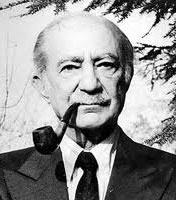 Nature’s
laws are man’s creation, we, not God, are
the lawgivers of the universe.
A law of nature is
man’s description
and not God’s prescription.
Nature’s
laws are man’s creation, we, not God, are
the lawgivers of the universe.
A law of nature is
man’s description
and not God’s prescription.
Morris Kline; (1908-1992); Mathematics: The Loss of Certainty; 1980; p98
Laws of science are not laws at all […]
Laws of science state tendencies we have recently observed in our corner of the universe.
Bart Kosko; (1960-); Fuzzy Thinking; 1993; p8
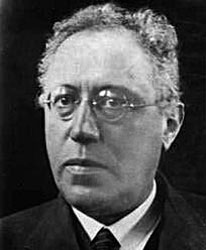 […] there is not a single law of nature which we know to be valid; the laws of nature are hypotheses which we assert tentatively.
Hans Hahn; (1879-1934); Logic, Mathematics and Knowledge of Nature; 1933
Scientific theories are perpetually changing.
Karl Popper;
(1902-1994);
The Logic of Scientific Discovery; 1959/1968; p71
A theory is accepted […] because it can explain
all facts already observed […] an
infinite
number of theories can meet this requirement.
J. H. Randall; (1899-1980); Philosophy: An Introduction; 1942/1957; p137
The principles of dynamics appeared to us first as experimental truths, but we have been compelled to use them as definitions.
It is by definition that force is equal to the product of the mass and the
acceleration;
this is a principle which is henceforth beyond the reach of any future
experiment. Thus it is by definition that action and reaction are equal and
opposite.
Henri Poincaré; (1854-1912); Science and Hypothesis; 1905/1952; p104
Plato
[…] saw clearly that a doctrine of
universal flux involved the impossibility of knowledge. There could
be no knowledge if there is nothing that abides, for if all things
are in flux, any statement about things would cease to be true at the
very moment of utterance, since they would have changed into
something else, even before the statement in words was finished.
Sydney E. Hooper; Whitehead’s Philosophy: Eternal Objects and God;
Philosophy; v17; n65; 1942; p47
If we examine the history of science […] we find that in each period a given
theory is entertained by science as true. Shortly afterward, the theory is found
inadequate, and is replaced by a new theory […] These theories […] cannot all
be true. […] A true theory would not be replaceable, for what is true remains
true– unless of course what we are explaining no longer remains the same.
Thus the theories of
science are guesses, which are changed after the scientific fashions of
the day, but none are faithful accounts of reality.
J. H. Randall; (1899-1980); Philosophy: An Introduction; p98
[…] there is no law in nature, because nature is fallen and cannot be normative.
Moreover, the source of law is not nature but God. There is no law
in
nature, but a law over
nature, God’s law.
Rousas Rushdoony; The Institutes of Biblical Law; 1973
Science is
not
a system of certain, or well-established statements; nor is it a system which
steadily advances towards a state of finality. Our science is not
knowledge
(episteme); it can never
claim to have attained truth, or even a substitute for it, such as probability;
we do not know, we can only guess.
The old scientific ideal of episteme– of absolutely certain, demonstrable
knowledge– has proven to be an idol. The demand for scientific objectivity makes it
inevitable that every scientific statement must remain tentative for ever.
Karl Popper;
(1902-1994);
Logic of Scientific Discovery; p278, 280
Strange as it may seem, an
accomplished artist often has little notion of what art is, and a
man may be an expert scientist without knowing what science is.
Gordon Clark; (1902-1985);
The Philosophy of Science and Belief in God;
1966; pxv
[…] although science is a useful tool by means of which mankind may
live comfortably in this world, it can never give us truth. The
discipline of science is a continually changing endeavor, and
that which changes can never be true.
Therefore, the discipline of science, as valuable as it is,
must not be viewed as a means by which we come to knowledge of
“truth.”
W. Gary Crampton; Review:
Presuppositional Apologetics by Greg L. Bahnsen; The
Trinity Review; n298; 2011; p7
When we call theories ‘true’ we do not mean that they are exempt from
improvement. We mean that they are accepted on the best available evidence.
It is possible to eliminate the word ‘true’ in speaking of scientific theories,
and speak only of the ‘best-evidenced’ theories. […]
The quest for certification can never be
satisfactorily completed, because it is a quest for an infallible guarantee.
J. H. Randall; (1899-1980); Philosophy: An Introduction; p100
Our experience with the Newtonian theory,
probably the most successful scientific theory ever constructed, may suggest
that we look twice at the foundations before building the Kingdom of Heaven on
the ever receding shores of the expanding universe, as some have attempted to
do. The extrapolators seem to believe that although scientific theories cannot
save themselves, they can save others.
Eric Temple Bell; (1883-1960); The Search for Truth; 1935/1946; p195
There is today no avenue of scientific investigation in which the
intellectually honest scientist will assert that the theorems on
which current investigations are conducted have been “established
beyond doubt.” The most any such scientist will claim is that the
currently accepted theories provide a more satisfactory working
basis than was afforded by yesterday’s theories.
Clarence W.
Metcalf; The Search for Truth; Science; v113; n2946; 1951; p696
[…] scientific philosophy […] does not claim to
possess an absolute truth, the existence of which it denies for empirical
knowledge.
Hans Reichenbach; (1891-1953); The Rise of Scientific Philosophy; 1951;
p325
Science is always invention, never discovery.
Gordon Clark; (1902-1985); Behaviorism and Christianity; 1982/2008; p149
[…] we can
never
have perfectly clean-cut knowledge of anything.
It is a general consequence of the approximate character of all measurement that
no empirical science can ever make exact statements.
P. W. Bridgman; (1882-1961); The Logic of Modern Physics; 1927/1951; p33,
34
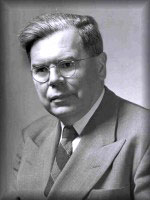 […]
nowhere has anyone ever seen a body continue moving in a straight line
with uniform velocity. Nor has anyone ever seen a body at rest remain at
rest. Indeed, we
do not even know what the words ‘at rest’ mean.
[…]
nowhere has anyone ever seen a body continue moving in a straight line
with uniform velocity. Nor has anyone ever seen a body at rest remain at
rest. Indeed, we
do not even know what the words ‘at rest’ mean.
Billy E. Goetz; (1904-1986); President of MIT 1958; Usefulness of the
Impossible; 1956; p190
To the superficial observer scientific truth is unassailable, the logic of
science is infallible […] Mathematical truths are derived from a few self-evident
propositions, by a chain of flawless reasonings; they are imposed not only on
us, but on Nature itself. By them the creator is fettered, as it were, and His
choice is limited to a relatively small number of solutions. A few experiments,
therefore, will be sufficient to enable us to determine what choice He has made.
[…] This, to the minds of most people, and to students who are getting their first
ideas of physics, is the origin of certainty in science.
Henri Poincaré; (1854-1912); Science and Hypothesis; 1905/1952; pxxi
 The particular law that the scientist announces to the world is not a
discovery forced on him by so-called facts; it is rather a choice from among an infinity of laws all of which enjoy the same experimental basis. […]
The scientist wants mathematical accuracy; and when he cannot discover it, he makes it.
[…]
however useful scientific laws are, they cannot
be true.
The particular law that the scientist announces to the world is not a
discovery forced on him by so-called facts; it is rather a choice from among an infinity of laws all of which enjoy the same experimental basis. […]
The scientist wants mathematical accuracy; and when he cannot discover it, he makes it.
[…]
however useful scientific laws are, they cannot
be true.
Gordon Clark; (1902-1985); A Christian View of Men & Things; 1952/1981;
p209
It is quite safe to say that no significant
experiment can be completed without measuring a line. […] the length of a line […] is most difficult to
ascertain.
Gordon Clark; (1902-1985); A Christian View of Men & Things; 1952/1981;
p205,206
There is an impossibility of making measurements
which is due to the limitation of our technical means […] In addition,
there is a logical impossibility of measuring […]
It is logically impossible to determine whether the standard meter in
Paris is really a meter […]
the meter cannot be defined in absolute terms.
[…] all our measurements will still contain some degree of
inexactness which a progressive technique will gradually reduce but never
overcome.
Hans Reichenbach; (1891-1953); Philosophy of Space & Time; 1927/1958;
p28, 29
The method of the physical sciences is based upon the
induction which leads us to expect the recurrence of a phenomena when the
circumstances which give rise to it are repeated.
If all the
circumstances could be simultaneously reproduced, this principle could be
fearlessly applied; but this never
happens; some of the circumstances will always be missing.
Henri Poincaré; (1854-1912); Science and Hypothesis; 1905/1952; pxxvi
[…] it is doubtful whether sensations can be trusted to tell us the truth about
anything more than the obvious and barren fact that they are experienced.
E. S. Brightman; (1884-1953); An Introduction to Philosophy; 1925/1951;
p55
[…] science is extremely useful, though by its own
requirements it must be false.
Gordon Clark; (1902-1985); A Christian View of Men & Things; 1952/1981;
p210
It is often said the experiments should be made without preconceived ideas. That
is impossible. Not only would it make every experiment fruitless, but even if we
wished to do so, it could not be done.
Henri Poincaré; (1854-1912); Science and Hypothesis; 1905/1952; p143
 Everything
which the bodily sense touches and which is called sensible is constantly
changing. […] what does not remain stable cannot be perceived, for that is
perceived which is grasped by knowledge, but that cannot be grasped which
changes without ceasing.
Therefore truth in any genuine sense is not something to
be expected from the bodily senses.
Everything
which the bodily sense touches and which is called sensible is constantly
changing. […] what does not remain stable cannot be perceived, for that is
perceived which is grasped by knowledge, but that cannot be grasped which
changes without ceasing.
Therefore truth in any genuine sense is not something to
be expected from the bodily senses.
[…] in our present state none of our bodily senses has any contact with the
incorruptible and immutable, unless, of course, something such be divinely
revealed to it.
If, therefore, there are false images [mistaken judgments] of sensible objects,
and if they cannot be distinguished by the senses themselves, and if nothing can
be perceived except what is distinguished from the false, then
there is no criterion for
truth resident in the senses.
St. Augustine; (354-430); 83 Different Questions; p40, 41
On closer analysis we even find that science knows no “bare facts” at all
but that the “facts” that enter our knowledge are already viewed in a
certain way and are, therefore, essentially ideational. This being the case,
the history of science will be as complex, chaotic, full of mistakes, and
entertaining as the ideas it contains, and these ideas in turn will be as
complex, chaotic, full of mistakes, and entertaining as are the minds of
those that invented them.
Paul Feyerabend
(1924-1994); Against Method; 1975,2010; p3
[…] The theory always came first, put forward
from the desire to have an elegant and consistent mathematical model. The
theory then makes predictions, which can then be tested by observation. If
the observations agree with the predictions, that doesn’t prove the theory;
but the theory survives to make further predictions, which again are tested
against observation. If the observations don’t agree with the predictions,
one abandons the theory.
[…] a theory of
physics is just a mathematical model that we use to describe the results of
observations. A theory is a good theory if it is an elegant model, if it
describes a wide class of observations, and if it predicts the results of
new observations. Beyond that, it makes
no sense to ask if it corresponds to reality, because we do not know what
reality is independent of a theory.
Stephen Hawking; My Position; Black Holes and Baby Universes; 1993;
in Science and Its Ways of Knowing; Hatton & Plouffe; 1997
 […]
Christians who put their trust in science as the key to understanding the
material universe should be embarrassed by the fact that
science never discovers truth.
One of the insuperable problems of science is the fallacy of induction;
indeed, induction is an insuperable problem for all forms of empiricism. The
problem is simply this: Induction, arguing from the particular to the
general, is always a fallacy. No matter how many white swans one observes,
one never has sufficient reason to say that all swans are white.
[…]
Christians who put their trust in science as the key to understanding the
material universe should be embarrassed by the fact that
science never discovers truth.
One of the insuperable problems of science is the fallacy of induction;
indeed, induction is an insuperable problem for all forms of empiricism. The
problem is simply this: Induction, arguing from the particular to the
general, is always a fallacy. No matter how many white swans one observes,
one never has sufficient reason to say that all swans are white.
John Robbins; (1948-2008); An Introduction to Gordon Clark; Trinity
Review; Jul-Aug 1993; p7
ASKED AND ANSWERED ON QUORA
***
What is the definition of
“theory” in
science? Why do some people have trouble accepting certain scientific
theories?
***
The definitions of most words are not black and white
terms. The definitions of most words are multiple and have fuzzy edges.
The word “theory” is a word that has very fuzzy edges and is misused so
often that it has become more misleading than enlightening.
Empirical
science progresses in small steps of increasing levels of certainty through
increasing number of observations of how we think nature behaves. There is
no clear boundary between a guess, a hypothesis, a theory or a law of
science.
We must understand that humans are fallible creatures and we can
never be certain if our conclusions- our laws- are really true. The task of
science is to increase the number of our observations, knowing that sooner
or later our laws will be superseded by new ones.
All of science is based
on inductive reasoning. Induction is the attempt to make universal
conclusions (laws), based on a necessarily limited number of observations.
Thus all laws of science are the result of fallacious reasoning. When even
laws of science are not certain, we can be certain that theories have a long
way to go to become laws.
We live on a tiny planet in a vast universe.
Our observations of nature are insignificant in comparison to what is
possible. Thus all laws of science are always corrigible. Our conclusions
about nature must remain forever corrigible. Laws of science are educated
guesses. We know so little about how nature works.
Science is on an
endless search for the truths of nature, but since science does not know
what is truth, science can never be certain that it has found it. We are
left with making educated guesses, another definition of “theory.”
Do not
expect certainty from the investigations of fallible humans. Laws of science
do not have to be true to be useful, just as the teeth of a saw do not have
to be perfectly “trued” to be able to cut wood.
All inductive arguments in the last resort reduce themselves to the following form: “If this is true, that is true: now that is true, therefore this is true.”
This argument is, of course, formally fallacious.
[…] If I were to advance such an argument, I should certainly be thought foolish, yet it would not be fundamentally different from
the arguments upon which all scientific laws are based.
Bertrand Russell; (1872-1970); The Scientific Outlook; 1931/1962; p74
Science can never be more than an affirmation of certain things we
believe in. These beliefs must be adopted responsibly, with due
consideration of the evidence and with a view to universal validity.
But eventually they are ultimate commitments, issued under the seal
of our personal judgment. At some point we shall find ourselves with
no answer to queries than to say “because I believe so.”
Michael Polanyi; Scientific Beliefs;
Ethics; v61; n1; 1950; p35
We do not have an infallible ability
to distinguish between correct & incorrect perceptions.
Aenesidemus, leader of the third skeptical school, drew up “ten tropes”, a
general statement of reasons why perception must not be trusted, as follows:
Things present a diverse appearance:
1- to different species of
animals
2- to different men
3- to the different senses of one and
the same man
4- to the same sense according to the man’s
circumstances and physical condition
5- to the same sense according
to the distance & perspective.
Moreover
6- on account of mixture
with one another in various degrees
7- on account of their extent
In general
8- perception depends upon the relation of the perceiver
to his object, or of things or notions to one another.
9- their
strength varies with habituation
10- the beliefs, laws & customs of
men are indefinitely variable.
Aenesidemus; Encyc. Brit.; 1964; v1;
p197
 It
is a commonplace that all our knowledge is in some degree liable to error, and
that we are fallible even in our most dogmatic moments.
It
is a commonplace that all our knowledge is in some degree liable to error, and
that we are fallible even in our most dogmatic moments.
Bertrand Russell; (1872-1970); Theory of Knowledge;
1913/1992; p167
Empiricists usually believed that the empirical basis consisted of absolutely
‘given’ perceptions or observations, of ‘data’, and that science could build on
these ‘data’ as if on rock. In opposition, I pointed out that the apparent
‘data’ of experience were always interpretations in the light of theories, and
therefore affected by the hypothetical or conjectural character of all theories.
[…] there are never any un-interpreted data experienced by us […]
Karl Popper; (1902-1994);Conjectures & Refutations; 1965;
p387
Is the sensation which I call blue really the same as that which my neighbor
calls blue?
Is it possible that a blue object may arouse in him the same sensation that a
red object does in me and vice versa?
P. W. Bridgman; (1882-1961); The Logic of Modern Physics; 1927/1951; p30
[…] empiricism as a theory of
knowledge has proved inadequate […] all
human
knowledge is uncertain, inexact & partial. To this doctrine we have not found
any limitation whatever.
Bertrand Russell; (1872-1970); Human Knowledge; 1948/1992;
p527
 Scientific
theories are not only equally
unprovable,
and equally improbable, they are also equally
undisprovable. The recognition that not only the theoretical but
all the
propositions in science are fallible,
means the total collapse of all forms of dogmatic justificationism as
theories of scientific rationality.
Scientific
theories are not only equally
unprovable,
and equally improbable, they are also equally
undisprovable. The recognition that not only the theoretical but
all the
propositions in science are fallible,
means the total collapse of all forms of dogmatic justificationism as
theories of scientific rationality.
Imre Lakatos; (1922-1974);
Criticism and the Growth of Knowledge; Imre
Lakatos; ed.; 1970; p103
 Our
senses were given to us for the preservation of our bodies and not for the
acquisition of truth.
Our
senses were given to us for the preservation of our bodies and not for the
acquisition of truth.
[…]
I demonstrate in several ways that our senses, our
imaginations, and our passions are altogether useless for discovering
the truth and our good, that, on the contrary, they dazzle us and seduce
us in every instance, and generally that all the knowledge the mind
receives through the body, or on account of some motion occurring in the
body, is false and confused in relation to the objects it represents
(although this knowledge is quite useful to the preservation of the body
and of goods related to the body.)
From The Search After Truth,
Nicolas Malebranche, 1674
Discarded Theories of Science
* The Crystalline Spheres of Ancient and Medieval Astronomy
* The Humoral Theory of Medicine
* The Effluvial Theory of Static Electricity
* The Phlogiston Theory of Chemistry
* The Caloric Theory of Heat
* The Vibratory Theory of Heat
* The Vital Force Theories of Physiology
* The Electromagnetic Aether
* The Optical Aether
* The Theory of Circular Inertia
* Theories of Spontaneous Generation
Larry Laudan; A Confutation of Convergent Realism; Philosophy of Science; 1981;
p33
Laws of science, which we formulate after careful observations of
nature, are forever corrigible descriptions. They are Descriptive and are NEVER Prescriptive.
Man does not need to know truth about nature to
be able to do useful science.
Nature is incapable
of communicating any truth about itself. Matter has no mind. Mindless
matter cannot reveal anything about itself to men with minds. What we
believe to be truth about nature (i.e. laws of science) are our own
inventions. Careful observation and repeatable experimentation can help
us to deal with our material environment, but we should not expect to
arrive at truth about nature when our experiences are extremely limited,
our subject is in a constant state of mutation, and our senses and minds
are fallible.
Neither our senses nor our minds are capable of
differentiating between truth and error.
We cannot make
universal statements because we cannot have universal experiences.
It is impossible to make immutable statements
about objects that are in a constant state of change.
Science would not be
possible without the existence of motion. Since all motion is relative,
science can never discover truth because truth cannot be the outcome of
relative motions.
The possibility of hitting upon the right theory
is zero, because we can find an infinite number of explanations (laws)
for every set of experiences.
Empiricism, the
measurement of objects and events with man-made tools and using our
fallible senses is never without error.
Induction, the basis of all science, is always a
fallacy. Arriving at conclusions by observing a very limited number of
experiences can Never lead to truth.
Laws of science are
our attempts to describe how we believe nature behaves. They are always
erroneous.
All efforts to try
and reconcile science with Revelation are futile and misguided at best -
we are not to expend time and resources to try and “fit” the Bible into
science or vice versa.
Our commission is to preach the Gospel to all
mankind.
Mankind confuses
success with truth. Success in science is mistaken for truth in science.
The aim of science is
to be able to predict the future. If a cause-and-effect relationship
could be established with certainty, then we can predict the future. But
such a relationship is impossible to confirm.
The notion that
humans are “rethinking God’s thoughts after Him” by investigating nature
and formulating “laws” which they assume to be how nature behaves is
utterly without justification. Such a proposal is nothing less than
man’s attempt to attain godhood & is hubris defined. (1-26-13)
The domain of science
is not truth or even a substitute for it such as probability.
Clark, Gordon H.
>
Science and Truth
Feigl, Herbert; Brodbeck, M.; eds. > Readings in the Philosophy of Science
Hempel, Carl G. > On The Nature of Mathematical Truth
Lakatos, Imre > Falsification and the Methodology of Scientific Research Programmes
Robbins, John W. > Review: Criticism and the Growth of Knowledge; Lakatos & Musgrave; eds.
Alexander, H. G. > The Leibniz-Clarke Correspondence
Anderson, James N. > Secular Responses to the Problem of Induction
Arons, Arnold B.; Bork, Alfred M; eds. > Science & Ideas
Bealer, George; Strawson, P. F. > The Incoherence of Empiricism
Berkeley, George > Criticism of Newton’s Doctrines of Space
Boltzmann, Ludwig > Theories as Representations
Bridgman, Percy W. > Quo Vadis
Bridgman, Percy W. > The Logic of Modern Physics
Brodbeck, May > Meaning and Action
Bunge, Mario > Scientific
Research I
Bunge, Mario > Scientific Research II
Calvo, Tomás > The Verb ‘Be’ (εἰμί) and Aristotelian Ontology
Carnap, Rudolf > Probability and Inductive Logic
Clark,
Gordon H. > Reply to Arthur F. Holmes
Clark, Gordon H. >
Reply to David H. Freeman
Clark, Gordon H. > Reply to George
I. Mavrodes
Clark, Gordon H. > Reply to Gilbert W. Weaver
Clark, Gordon H. > Reply to John T. Stahl
Clark, Gordon H. >
Reply to Ronald H. Nash
Clark, Gordon H. > The Limits & Uses
of Science
Clark, Gordon H. > The Philosophy of Science and
Belief In God
Clark, Gordon H. > The Problem of Motion
Conant, James B. > On Understanding Science
Crampton, W. Gary
> The Biblical View of Science
Danto, Arthur; Morgenbesser,
Sidney; eds. > Philosophy of Science
de Santillana, Giorgio >
The Development of Rationalism and Empiricism
Descartes, René >
Two Meditations
Duhem, Pierre >
Physical Theory and Experiment
Einstein, Albert >
Geometry and Experience
Feigl, Herbert >
Some Remarks on the Meaning of Scientific
Explanation
Fitzpatrick, Richard >
A Modern Almagest
Frank, Philipp G. >
The Variety of Reasons for the Acceptance of
Scientific Theories
Goldman, Steven L. >
Science in the Twentieth Century
Goldman, Steven L. > Science Wars
Hanson, Norwood Russell >
Newton’s First Law: A Philosopher’s
Door into Natural Philosophy
Hempel, Carl G. >
Empirical Statements and Falsifiability
Hempel, Carl G. > Fundamentals
of Concept Formation in Empirical Science
Hempel, Carl G. >
On the Logical Positivists’ Theory of Truth
Hempel, Carl G. > Philosophy of Natural Science
Hempel, Carl G. > Some Remarks
on ‘Facts’ and Propositions
Hempel, Carl G. > Some Remarks on Empiricism
Hesse, Mary B. >
Duhem, Quine and a New Empiricism
Hesse, Mary B. > Science and the Human Imagination
Horner, Jack K.; Rubba, Peter >
The Myth of Absolute Truth
Koyré, Alexandre >
Influence of Philosophic Trends on The Formulation of Scientific Theories
Kuhn, Thomas S. >
The Structure of Scientific Revolutions
Lakatos, Imre; Musgrave, Alan; eds. >
Criticism and the Growth of Knowledge
Last, C. E. >
Man in the Universe
Laudan, Larry >
Two Puzzles about Science: Reflections on Some Crises in the Philosophy and Sociology of Science
Lipton, Peter >
The Medawar Lecture 2004: The Truth about Science
Mach, Ernst >
Newton’s Views of Time, Space and Motion
Mach, Ernst >
The Significance and Purpose of Natural Laws
Maxwell, James Clerk >
Matter and Motion
McCulloch, Warren S. >
Mysterium Iniquitatis – of Sinful Man Aspiring Into
The Place of God
Moreland, J. P. >
The Shortcomings of Scientism
Morick, Harold >
The Critique of Contemporary Empiricism
Morick, Harold; ed. >
Challenges to Empiricism
Nagel, Ernest >
Patterns of Scientific Explanation
Nagel, Ernest >
The Causal Character of Modern Physical Theory
Nagel, Ernest; Brandt, Richard B; eds. >
Meaning and Knowledge
Pap, Arthur >
What is a Law of Nature?
Pearson, Karl >
The Grammar of Science
Plato >
Timaeus
Poincaré, Henri >
Hertz on Classical Mechanics
Poincaré, Henri > Non-Euclidean
Geometries and the Non-Euclidean World
Poincaré, Henri > Science and Hypothesis
Poincaré, Henri > Science and Method
Poincaré, Henri > The Measure of Time
Popper, Karl R. >
Conjectures and Refutations
Popper, Karl R. > Science: Conjectures and Refutations
Popper, Karl R. > The Logic of Scientific Discovery
Putnam, Hilary >
How not to Talk about Meaning
Quine, Willard V. O. >
Two Dogmas of Empiricism
Randall, John Herman Jr; Buchler, Justus >
Philosophy: An Introduction
Reichenbach, Hans >
From Copernicus to Einstein
Reichenbach, Hans >
The Philosophical Significance of the Theory of Relativity
Rodych, Victor >
Popper versus Wittgenstein on Truth, Necessity, and Scientific Hypotheses
Ross, Stephen D. >
Truth in Science: Unrestricted Validity
Rushdoony, Rousas
J. > The Mythology of Science
Russell, Bertrand >
Human Knowledge: Its Scope and Limits
Russell, Bertrand >
The Relation of Sense-data to Physics
Schlick, Moritz >
Are Natural Laws Conventions?
Schlick, Moritz >
The Foundation of Knowledge
Shapere, Dudley >
Philosophical Problems of Natural Science
Shelton, Drake >
Uncreated Light: Review of Morris Kline’s Mathematics: The Loss of Certainty
Sproul. R. C. >
Saving the Phenomena
Stenger, Victor J. >
Where do the Laws of Physics Come From?
Sullivan, John William Navin >
Limitations of Science
Thomas, Chris >
Science and the Bible
Tiner, Hudson John >
When Science Fails
Wellmuth, John >
The Nature and Origins of Scientism
Wigner, Eugene P. >
The Limits of Science
Zilsel, Edgar >
Problems of Empiricism


